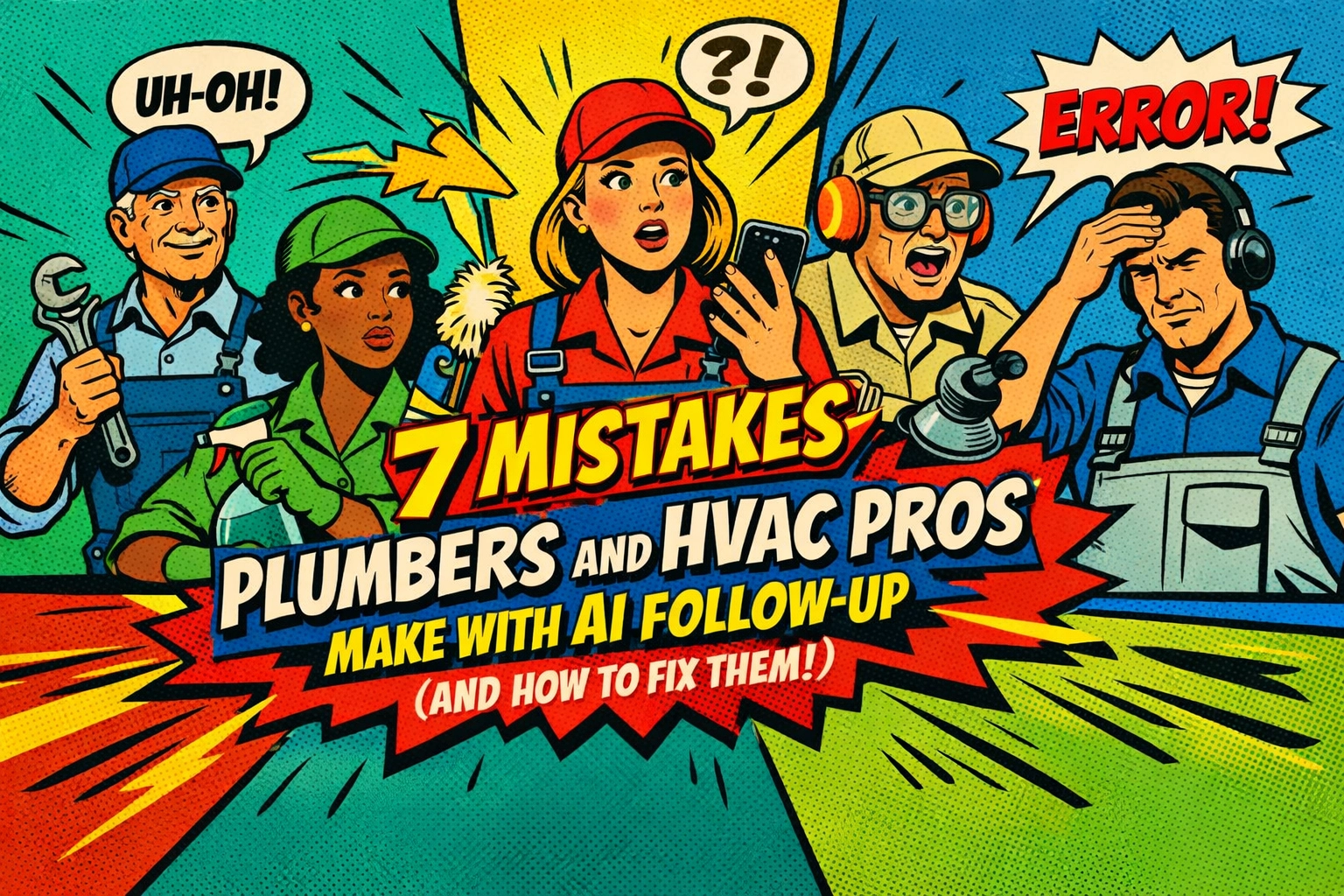
You didn't get into plumbing or HVAC to spend your evenings chasing down old leads and sending reminder texts. You got into it because you're good at what you do: and people need what you do.
But here's the reality: follow-up is where jobs are won or lost. And lately, AI tools have promised to take that off your plate.
The problem? A lot of plumbers and HVAC pros are setting up AI follow-up systems the wrong way. Not because they're careless: but because nobody told them what to watch out for.
Let's walk through seven common mistakes and, more importantly, how to fix them so your follow-up actually works for you.
Mistake #1: Setting It and Forgetting It
It's tempting. You set up an AI tool, watch a few messages go out, and think, "Great, that's handled." Then you move on to the next fire.
But AI isn't a crockpot. You can't just set it and walk away for six months.
What goes wrong: Messages get stale. Seasonal promos expire. The tone drifts. Customers start getting follow-ups that feel disconnected: or worse, irrelevant.
How to fix it: Block 20 minutes once a month to review what's going out. Read a few messages. Ask yourself: Would I respond to this? Make small tweaks. That's it.
Your AI should feel like an extension of you: not a robot running wild in your name.

Mistake #2: Sending the Same Message to Everyone
A homeowner who just got a $12,000 HVAC install doesn't need the same follow-up as someone who called about a clogged drain.
But a lot of AI systems (especially the cheap ones) blast the same generic message to your entire list.
What goes wrong: Customers feel like a number. Or they get annoyed because the message doesn't match their situation. Either way, trust takes a hit.
How to fix it: Segment your follow-ups by service type. Drain cleaning customers might hear from you in 45 days. Water heater installs? Maybe 90 days, with a maintenance reminder. HVAC tune-ups? Seasonal prompts work great.
Good AI tools let you create different flows for different jobs. Use that feature.
Mistake #3: Following Up Too Soon (or Too Late)
Timing is everything. Send a review request 10 minutes after your tech leaves, and it feels pushy. Wait three weeks, and the customer's already forgotten the job.
What goes wrong: You either annoy people or miss the window entirely.
How to fix it: For review requests, 24–48 hours after job completion is the sweet spot. For maintenance reminders, think about the natural service cycle. AC tune-ups make sense in early spring. Furnace check-ins hit better in fall.
Match your timing to the customer's life, not just your calendar.

Mistake #4: Letting AI Write Technical Stuff Without a Second Look
AI is great at sounding confident. That's part of the problem.
If you let it write follow-ups that include technical advice: like maintenance tips or troubleshooting suggestions: it might get something wrong. And in your industry, wrong advice can mean a flooded basement or a broken unit.
What goes wrong: Misinformation goes out under your name. Customers lose trust. Or worse, they follow bad advice and call you back upset.
How to fix it: Keep AI in its lane. Let it handle scheduling prompts, friendly check-ins, and review requests. But if any message includes technical content, you (or your lead tech) should eyeball it before it sends.
A quick review beats a callback any day.
Mistake #5: Ignoring Customer Sentiment
Not every customer is happy. And if your AI follow-up treats a frustrated customer the same as a satisfied one, you've got a problem.
What goes wrong: Someone who had a rough experience gets a cheerful "Hope we nailed it!" message. Now they're more frustrated: and maybe heading to Google to leave a not-so-great review.
How to fix it: Use tools that let you route responses based on sentiment. If someone replies with frustration or concern, flag it for a real human to step in. A quick personal call can turn a bad situation around. A tone-deaf auto-reply can't.

Mistake #6: Using a Patchwork of Disconnected Tools
One tool for texts. Another for emails. A third for review requests. None of them talk to each other.
Sound familiar?
What goes wrong: Customers get duplicate messages. Or conflicting ones. Or they fall through the cracks entirely because nobody's tracking the full picture.
How to fix it: Look for a follow-up system that integrates: or at least centralizes: your communication. You want one dashboard where you can see what's gone out, what's scheduled, and what needs attention. Fewer tools, less chaos.
Mistake #7: Over-Automating and Losing the Human Touch
Here's the truth: AI follow-up is supposed to give you more time for the human stuff: not replace it entirely.
If every single touchpoint is automated, customers start to feel it. The relationship gets colder. And in a business built on trust and referrals, that's a problem.
What goes wrong: You save time in the short term but lose loyalty in the long run. Customers don't remember the perfectly timed auto-text. They remember the tech who called to check in after a big job.
How to fix it: Use AI for the routine stuff: reminders, check-ins, review nudges. But carve out space for real, human follow-up on your biggest jobs or your best customers. A two-minute phone call can do more for your reputation than a dozen automated messages.

The Bottom Line
AI follow-up isn't magic. It's a tool. And like any tool, it works best when you use it with intention.
Here's the quick checklist:
- Review your automations monthly
- Segment messages by service type
- Time follow-ups to match the customer's world
- Keep humans in the loop on technical content
- Route unhappy customers to a real person
- Consolidate your tools where you can
- Leave room for genuine, personal touchpoints
You're not trying to automate your way out of relationships. You're trying to stay top of mind with the people who already trust you: without burning out in the process.
That's the goal. And it's totally doable.
If you're looking for help setting up follow-up systems that actually fit your business, Local BrandIQ works with plumbers, HVAC pros, and other home service businesses to get this stuff dialed in( without the overwhelm.)