You're already working past 6 PM most nights. You're answering texts from customers, ordering parts, managing crews, and somehow supposed to "do marketing" too. Meanwhile, everyone's telling you AI is the answer: but when you actually look into it, it feels like you need a computer science degree just to get started.
Here's the truth: you don't.
You're Not Behind: You're Just Busy
Let's start with what's really happening. You built your pest control or HVAC business the old-fashioned way: good work, word of mouth, maybe some Yelp reviews. It worked for years. But now customers are searching differently, your competitors are showing up everywhere online, and you're wondering if you missed some critical tech moment while you were actually running your business.
You didn't miss anything. You've been doing the hardest part all along: delivering excellent service. What you need isn't some complicated AI transformation. You need a simple framework that takes what you're already good at and makes it work harder for you online.

The R.I.S.E. Framework: Built for Real Service Companies
Forget the buzzwords. The R.I.S.E. framework is designed specifically for businesses like yours: pest control, HVAC, plumbing, electrical, roofing: any company that serves specific neighborhoods and communities. Here's how it works:
Relevance means showing up when people in your actual service area search for help. Not the whole city: the specific neighborhoods and suburbs where you actually work. When someone in Lakewood searches for "furnace repair," they should find you if you serve Lakewood. Simple as that.
Integrity is about sounding like a real local business, not some spam operation. Your Google Business Profile should reflect who you actually are and the communities you genuinely serve. No keyword stuffing, no fake reviews, just authentic positioning.
Service-area intent means using the words your actual customers use when they need help. "AC not cooling" instead of "comprehensive HVAC diagnostics." People don't talk like marketing brochures, and your online presence shouldn't either.
Expansion readiness keeps things organized so when you're ready to add another service area or hire another crew, your marketing structure can grow without starting from scratch.
That's it. Four concepts you already understand because you live them every day.
What This Actually Looks Like in Month One
You don't need a six-month rollout plan. You need to start this month. Here's your first four weeks:
Week 1: Fix Your Google Business Profile
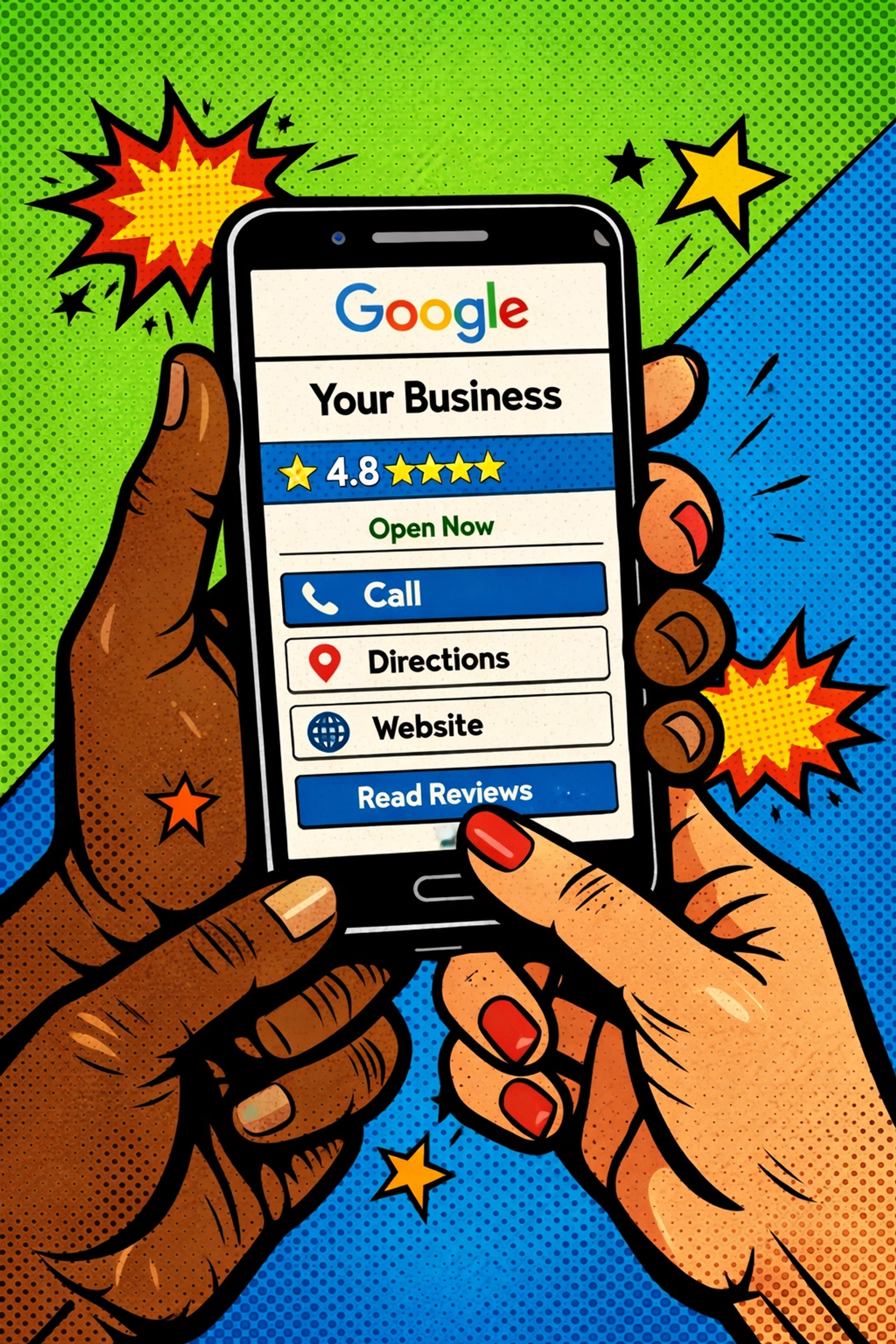
Open your Google Business Profile right now. Is every service area listed? Are your hours accurate? Do you have recent photos of your actual work, not just stock images? This is your storefront. AI tools can optimize it, but first it needs to be accurate. Spend two hours making it perfect.
Week 2: Set Up Basic Automation
You're already answering the same questions every week. "Do you service my area?" "What's the typical cost for…?" "How fast can you get here?" Use simple AI-powered chat tools to handle these questions automatically. You'll still get the leads: you just won't be typing the same responses at 9 PM anymore.
Week 3: Create Community-Specific Content
Write one post about something happening in your actual service area. If you're HVAC in Denver, talk about preparing for Front Range winter weather. If you're pest control in Houston, discuss the specific pests that thrive in Gulf Coast humidity. Not generic tips: local, useful information that shows you actually work in these neighborhoods.
Week 4: Get Review Responses on Autopilot
Set up automated monitoring for new reviews. You'll still read them personally, but AI can draft responses for you to approve. Every review gets acknowledged within 24 hours, even during your busiest week.
Why Local Partnerships Change Everything
Here's something nobody tells you: the fastest way to grow isn't just getting found online: it's getting referred by other local businesses that serve the same customers.
AI can identify which businesses in your area naturally complement yours. HVAC companies work well with electricians and insulation contractors. Pest control pairs with landscapers and home inspectors. Instead of competing for the same search terms, you're building referral relationships that send qualified customers both directions.
The data backs this up: service businesses actively managing local partnerships see 34% more new customer acquisition than those relying on search alone. It's not because the AI is magic. It's because it helps you systematically identify and track partnerships instead of hoping you'll bump into someone at the hardware store.
The Tools That Don't Require IT Training
You need tools built for service companies, not enterprise software companies. Look for platforms that:
- Connect directly to Google Business Profile
- Let your whole team access without charging per person
- Handle multiple functions in one place (you don't need seven different subscriptions)
- Use plain English, not tech jargon
Platforms like ConvertMate are designed specifically for local service businesses. You're not learning coding: you're managing the same business information you already know, and the AI optimizes it for search, social media, and local visibility automatically.
HubSpot works well if you're established and ready for comprehensive automation: things like identifying which leads are most likely to convert based on their behavior. But start simple. You can always add more sophisticated tools later.
What You Actually Need to Know (It's Less Than You Think)
You don't need to understand how AI works any more than you need to understand the algorithm your truck's computer uses. You need to:
- Keep your Google Business Profile updated
- Respond to reviews (or approve AI-drafted responses)
- Share what you're working on in your actual service areas
- Track which local partnerships send you business
The AI handles optimization, timing, targeting, and personalization. You handle what you're already good at: being a real business that does real work in real communities.
Your Google Business Profile is now a critical business asset, like your truck or your license. Treat it accordingly. Keep it current with accurate services, real photos from actual jobs, and honest information about what you offer.
When Weather Hits, You're Already There
Here's where this gets practical. When a major storm rolls through your service area or temperatures suddenly drop, AI monitoring catches it in real-time. Your advertising and content automatically adjust to capture customers searching for emergency help right now.
You're not scrambling to post on social media during a crisis: the system already shifted your visibility to match what people in your area are urgently searching for. You focus on answering the phone and dispatching crews.
Start With What You've Got
You already have everything you need to implement this framework:
A Google Business Profile (even if it needs updating), customers who know you do good work, specific neighborhoods where you operate, and knowledge about your local market that no AI can replicate.
The framework doesn't replace what you've built. It amplifies it. Your word-of-mouth reputation starts showing up in search results. Your community knowledge becomes content that ranks. Your existing customer relationships turn into reviews that drive new business.
You're not learning to be a tech company. You're learning to let technology do the repetitive marketing work so you can do what you're actually good at: running service calls, managing teams, and building a business.
This Week's Simple Start
Pick one thing this week. Update your Google Business Profile with current photos. Set up review monitoring. Write one neighborhood-specific post. Just one.
Next week, pick another. That's the framework. Not overwhelming transformation: just consistent, practical steps that compound over time.
The businesses winning with AI marketing aren't the ones with the biggest tech budgets. They're the ones who started simple, stayed consistent, and let the tools handle the optimization while they focused on serving customers.
You've got this. No tech degree required.